Stomp Like a DinosaurAngry?
Say this:
“Stomp like a roaring T-Rex, then freeze like a sneaky dino statue. What does your T-Rex sound like?”
Physical grounding techniques help release adrenaline and restore calm.
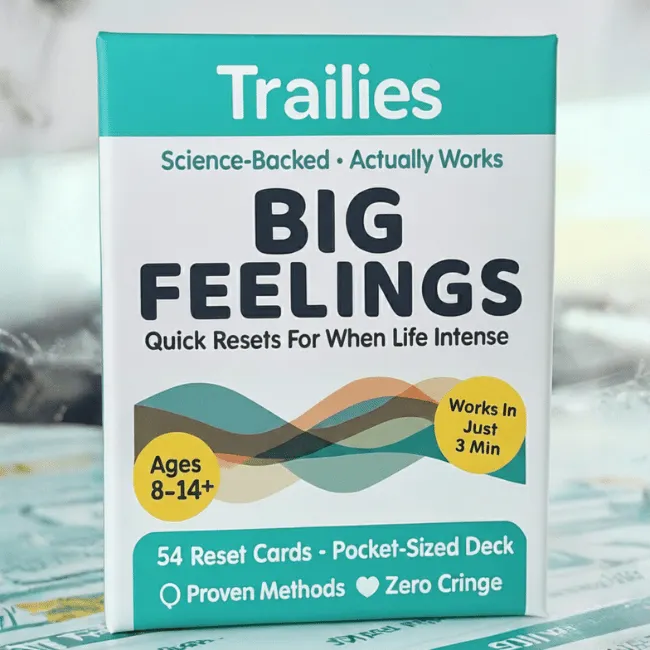
Emotion cards for ages 8-14+
Bigger Feelings, Older Kids · Ages 8-14
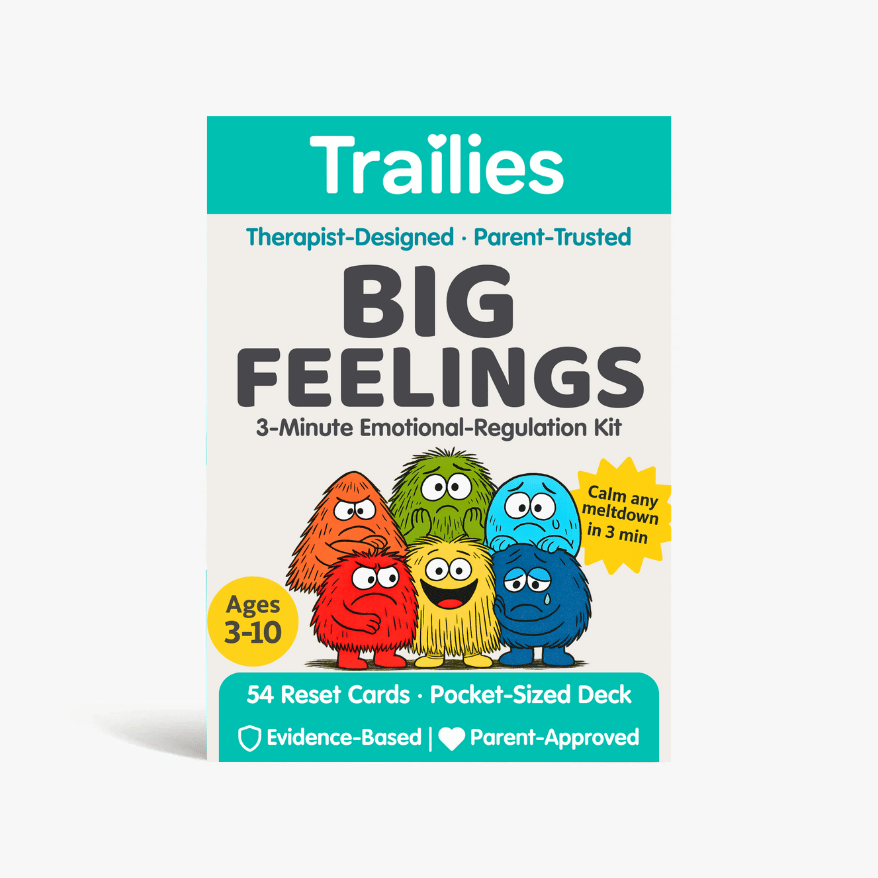
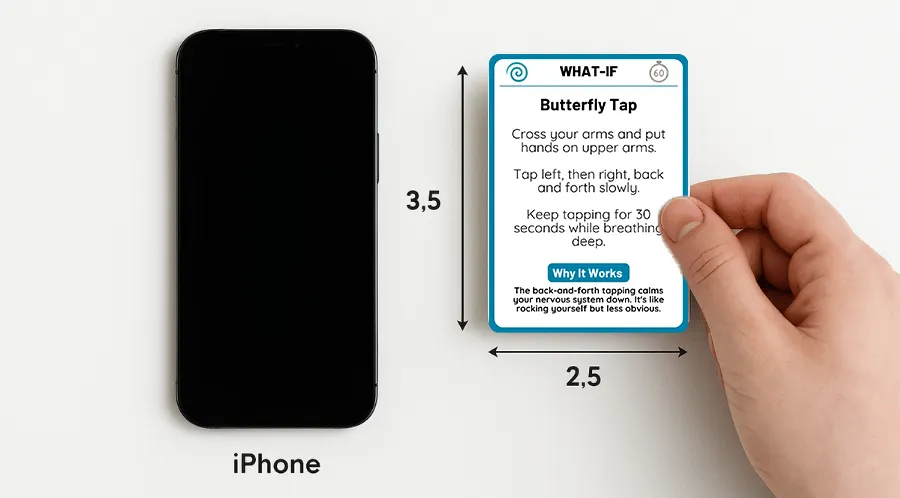
54 printed emotion-regulation cards built for tweens and early teens who go from zero to nuclear in 30 seconds. Real cards shipped to your door, ready for the actual meltdown moment.
Choose your edition
Secure checkout · Apple Pay, Google Pay & card
90-day money-back guarantee: try it with your family for 90 days
Teacher or school? Get bulk pricing
111,868+
Kids helped
68
Countries
4.89/5
Avg rating
Therapist
built
Because every tiny thing can turn into a 45-minute explosion. Wrong cup. "Five more minutes" on screens. Homework time. The sock feels weird. You said "good morning" wrong.
And it's happening 4+ times a week. After school. Bedtime. Mornings. Every single transition.
You're not just dealing with meltdowns. You're losing your kid. The snuggles stopped. The easy conversations. The kid who actually wanted to hang out with you. That's what keeps you up at night.
What you get
Read the actual words
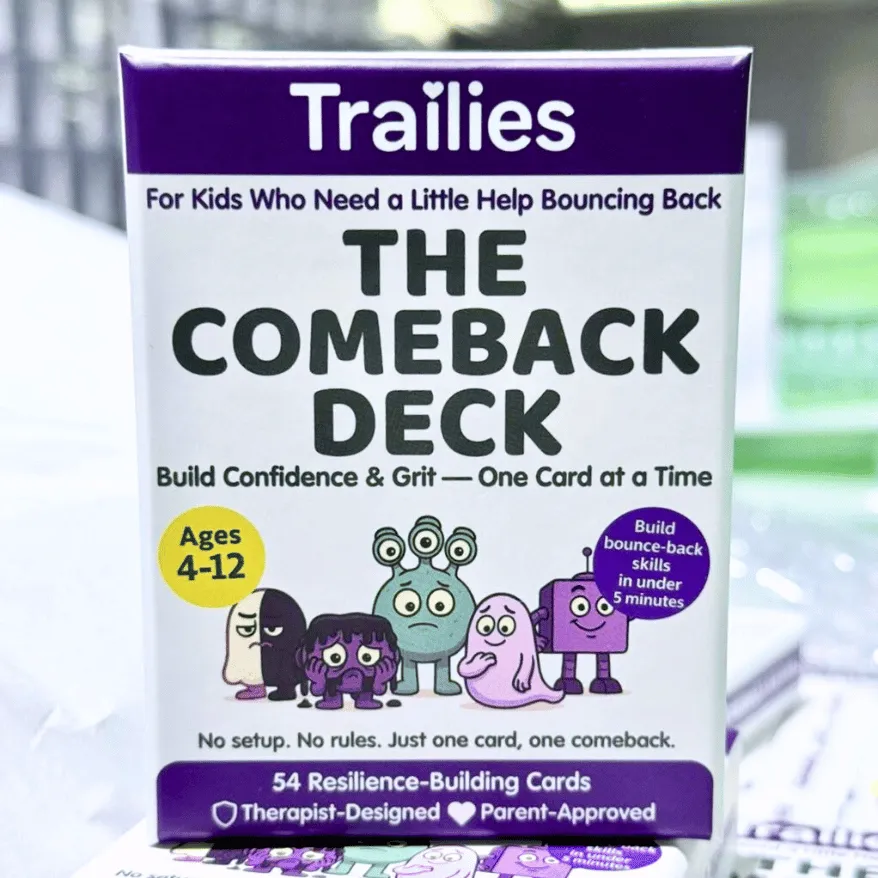
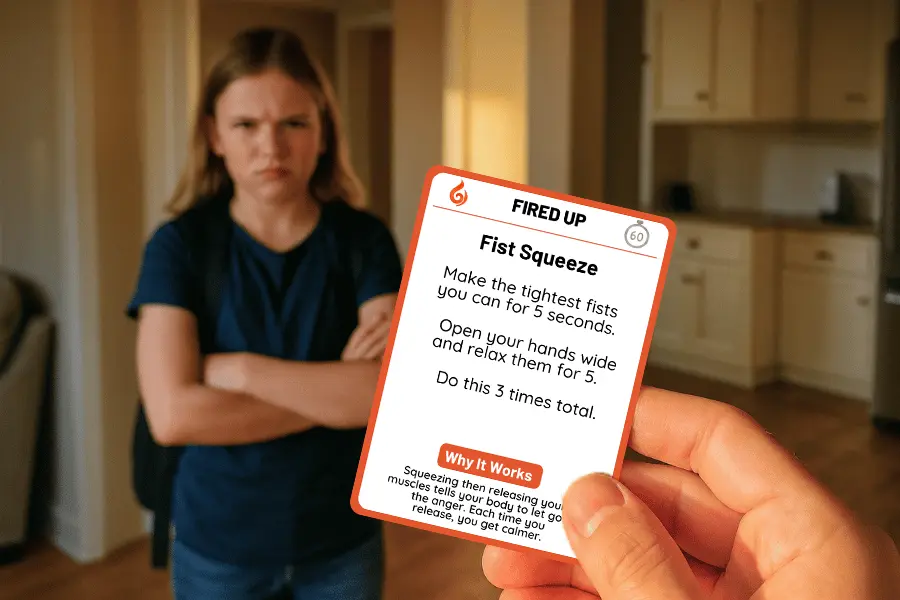
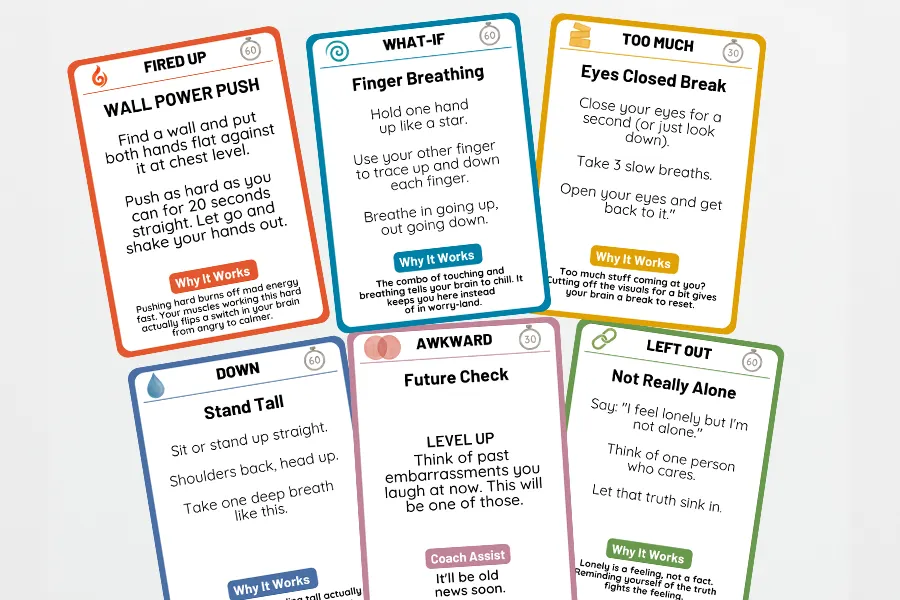
One deck, 54 cards, sorted by feeling. Your kid picks the card that matches the feeling, and the card does the talking. These are three real cards, word for word.
Say this:
“Stomp like a roaring T-Rex, then freeze like a sneaky dino statue. What does your T-Rex sound like?”
Physical grounding techniques help release adrenaline and restore calm.
Say this:
“Imagine a balloon in your chest. Breathe and let it grow bigger and warmer. What color is your happy balloon?”
Visualization and slow breathing soothe emotional distress and promote relaxation.
Say this:
“Hug your stuffed buddy or blanket tightly and let it make you feel cozy. What's your buddy's name?”
Physical touch releases oxytocin, reducing sadness and increasing feelings of safety.
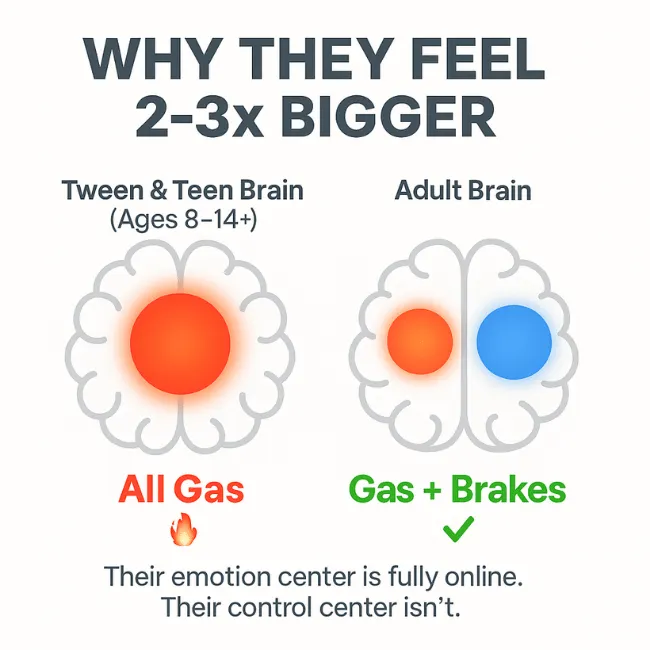
Your kid's brain feels everything two to three times bigger than you do. The emotion part is fully online: adult-level rage, panic, shame. The calm-down part is not there yet, and won't be until they're 25. Huge accelerator. No brakes. So what looks like "being dramatic" is just their brain screaming with zero tools to turn it down.
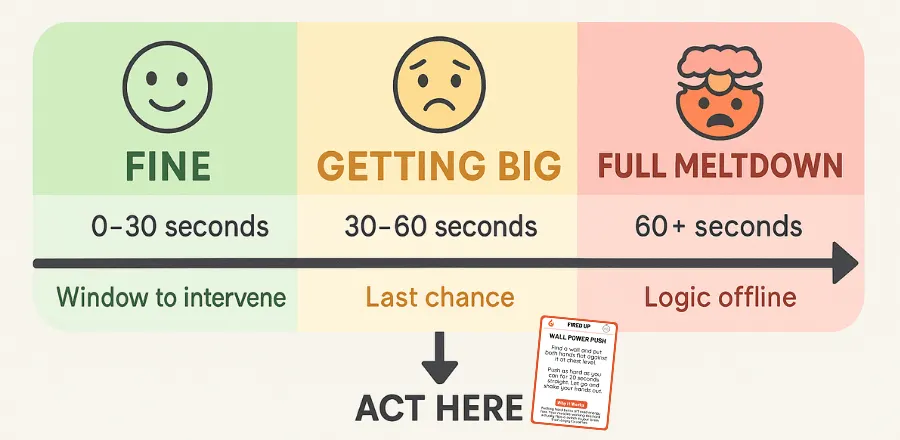
The window is 30 seconds. Between "fine" and "full nuclear." After that, the brain is flooded, logic is offline, and nothing you say lands. Talking? They can't hear you. Consequences? Gas on the fire. Deep breaths? You can't even remember them when you're falling apart too. You can't logic someone out of brain overwhelm. They need something external, concrete, and fast.
We reached out to child psychologists at Trailies, who explained: "You're trying to teach her to regulate AFTER she's already dysregulated. That's like teaching someone to swim while they're drowning." When she's flooded, her thinking brain is offline, so deep breaths, timeouts, and talking don't work. So we built the deck and tested it with real tweens for months, watching what worked and what got eye-rolls.
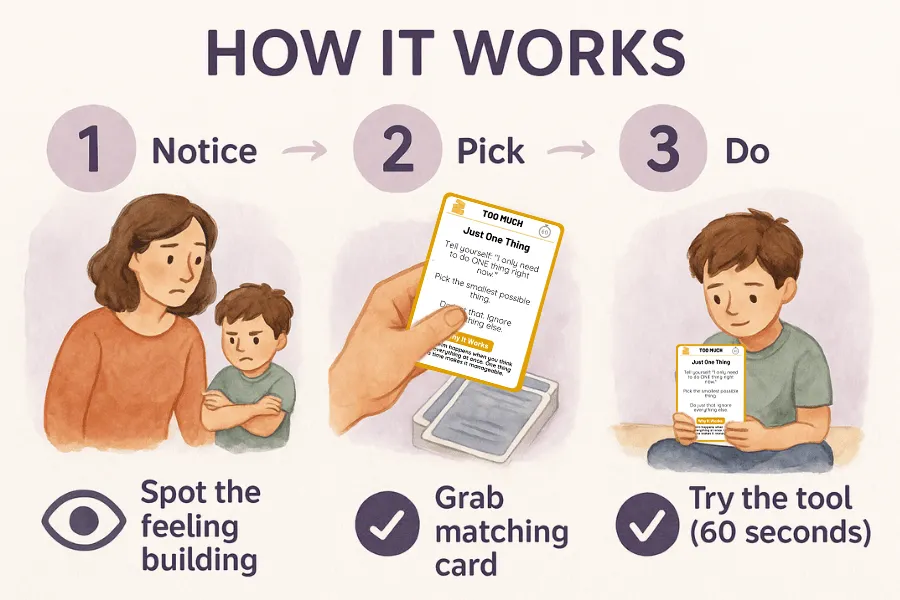
The flow is simple: notice what's happening, name the feeling, pick ONE action right now. Takes about 90 seconds. You grab a card, read it together, they do the thing. The explosion either doesn't happen, or you finally have a tool when it does. Squeeze your fists. Stomp. Push a wall. Not therapy homework, just fast tools they can actually use when their brain is on fire.
"Mom, can we do the card thing? My feelings are getting big." When they start asking for them, you know it's working.
How it works
The moment a feeling hits, you grab the card that fits instead of scrambling for the right words.
Every card is written word-for-word by age, so you just read it out loud. No prep, no training.
Your kid picks a calm-down strategy they actually like, and the storm passes faster than it used to.
What changes, and when
Tonight
The next big feeling, you grab a card instead of scrambling. One script for you, one 60-second reset for them. No prep, no props.
Week 1
90% of families see a change within the first week. Meltdowns get shorter because you both know what happens next.
Month 1
94% of families report fewer meltdowns. The card basket becomes the routine, and kids start picking their own reset before you ask.
The people behind it
Trailies isn't a worksheet from a stranger. It's the script two people wished they'd had, made with the clinicians who know what actually works.

I spent years watching good parents freeze at the exact moment their kid needed words. So we wrote the words down.

Nobody handed my parents a script. I built the one I wish they'd had, so the next kid gets the talk instead of the silence.
Every deck and script is built with child psychologists and grounded in PCIT, CBT, and 200+ studies.
The honest comparison
In-the-moment calm-down cards
Sorted by feeling, chosen by your kid
Age-banded (3-10 and tween/teen)
PCIT / CBT-informed
Works the second a meltdown starts
What it costs
What parents are saying
139 reviews
Showing 6 of 139 reviews
as a TK teacher i'm introducing the big feelings deck with my class this semester. the language is perfect for this age — concrete, clear, accessible. my colleagues are already asking to borrow the cards.
Melissa C
Verified Buyer
the key is knowing what kind of big feeling you're dealing with. a frustration tantrum and a temper tantrum need different responses. these cards address both — and the guidance for parents on how to tell the difference is actually really helpful.
Barry C
Verified Buyer
initially nothing shifted. then on day 4 or 5 my son stopped mid-meltdown and asked for the cards himself. i put them away thinking we were done but he's been asking again. the key: show them during calm times first. talk about the emotions. model using them yourself. then they work when it's hard.
Jenny P
Verified Buyer
as a body safety educator i want to highlight that emotional literacy — which the big feelings deck builds — is actually a protective factor against abuse. children who can name and communicate their feelings are more likely to disclose if something happens. these two products work together.
Rebecca B
Verified Buyer
we use these at circle time and i've noticed a measurable change in how the kids in my class handle frustration over the semester. they're naming their feelings instead of acting them out. that's the whole goal of emotional regulation education. these cards do it.
Wendy F
Verified Buyer
used these in my foster support group. parents of children with early trauma need concrete tools more than anyone — and these cards are exactly that. concrete, visual, repeatable. the children in our group took to them immediately.
Jana H
Verified Buyer
Questions
Everything you get today
Try it with your family, risk-free. If it's not right for you, email us within 90 days and we'll make it right, no hoops and no hard feelings. The only risk is another week of winging it.
3,200+ Talks gifted so far through the Trailies Forward Fund. No strings — just one parent making sure another has the words too.
How the Forward Fund works