
The science
We read the research so you don’t have to.
You don’t have time to dig through decades of child development studies. We did. Then we translated the work that actually holds up, into the kind of script you can read at bedtime without a textbook open next to it.
- PCIT
- CBT
- Attachment Theory
- Trauma-Informed
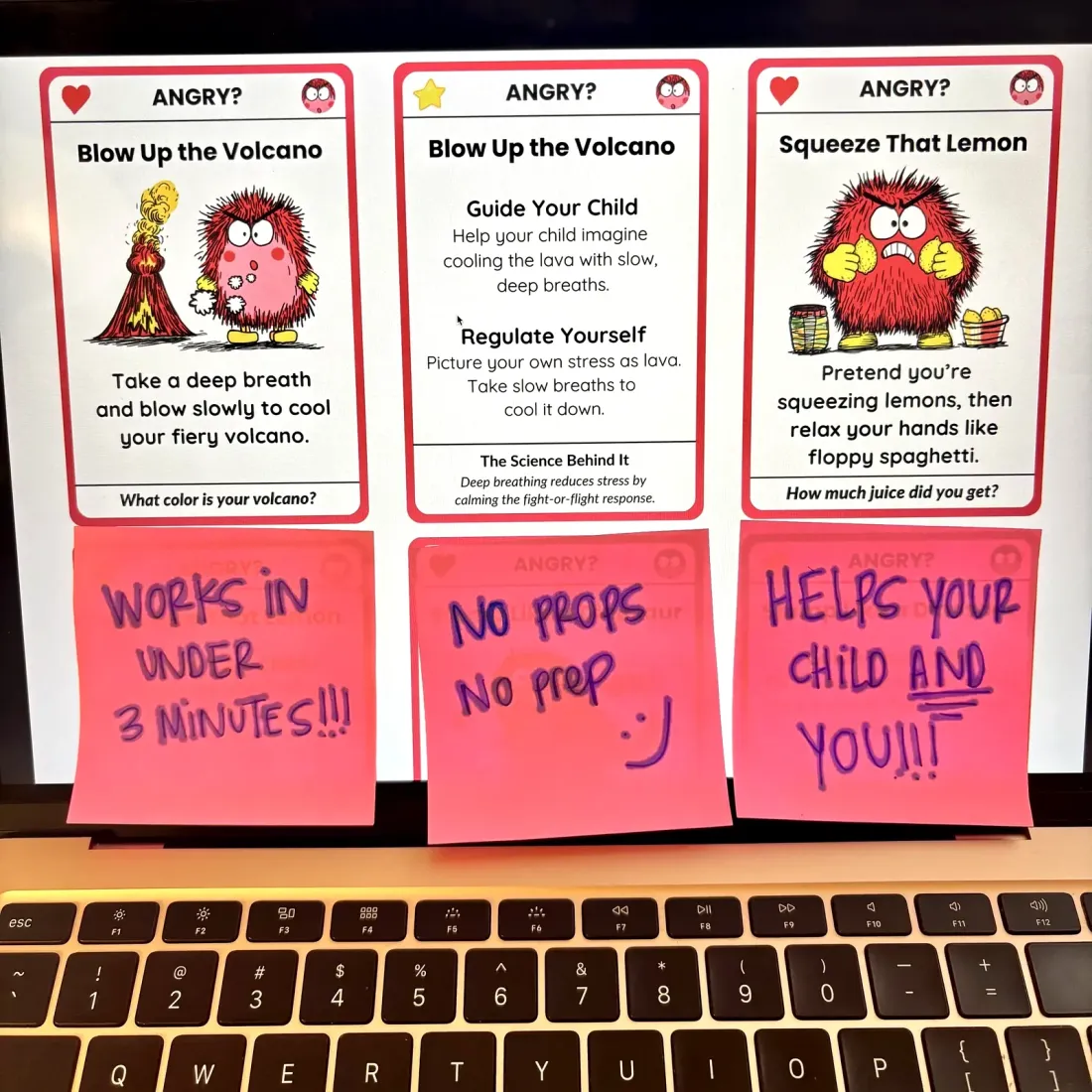
science you can read out loud
200+
Studies Referenced
The foundations
Four research traditions. Every Talk we make.
Decades of work from people whose careers are this. We’re not building a method from scratch. We’re standing on top of one.
Parent-Child Interaction Therapy
One of the most-studied approaches to parent-led behavior change, developed by Dr. Sheila Eyberg in the 1970s and tested in trials for decades. It's where our “you read, your kid responds” structure comes from.
Read more at PCIT InternationalCognitive Behavioral Therapy
The most well-researched therapeutic approach in psychology. It's how we handle the cognitive side, naming feelings, recognizing patterns, building scripts kids can use under pressure when their thinking brain has already left the room.
Read more at the APAAttachment Theory
Bowlby, Ainsworth, and 70 years of research showing one thing: kids learn regulation through connection with a trusted adult, not through information. It's why every Talk is parent-led, not kid-led.
Read more at the APA dictionaryTrauma-Informed Practice
The principle that protective education should never inadvertently scare or shame a kid. Every Talk is reviewed against trauma-informed care principles before it ships, especially body safety and online safety.
Read more at the NCTSNHow it works in the brain
Why “just calm down” makes it worse, and what actually helps.
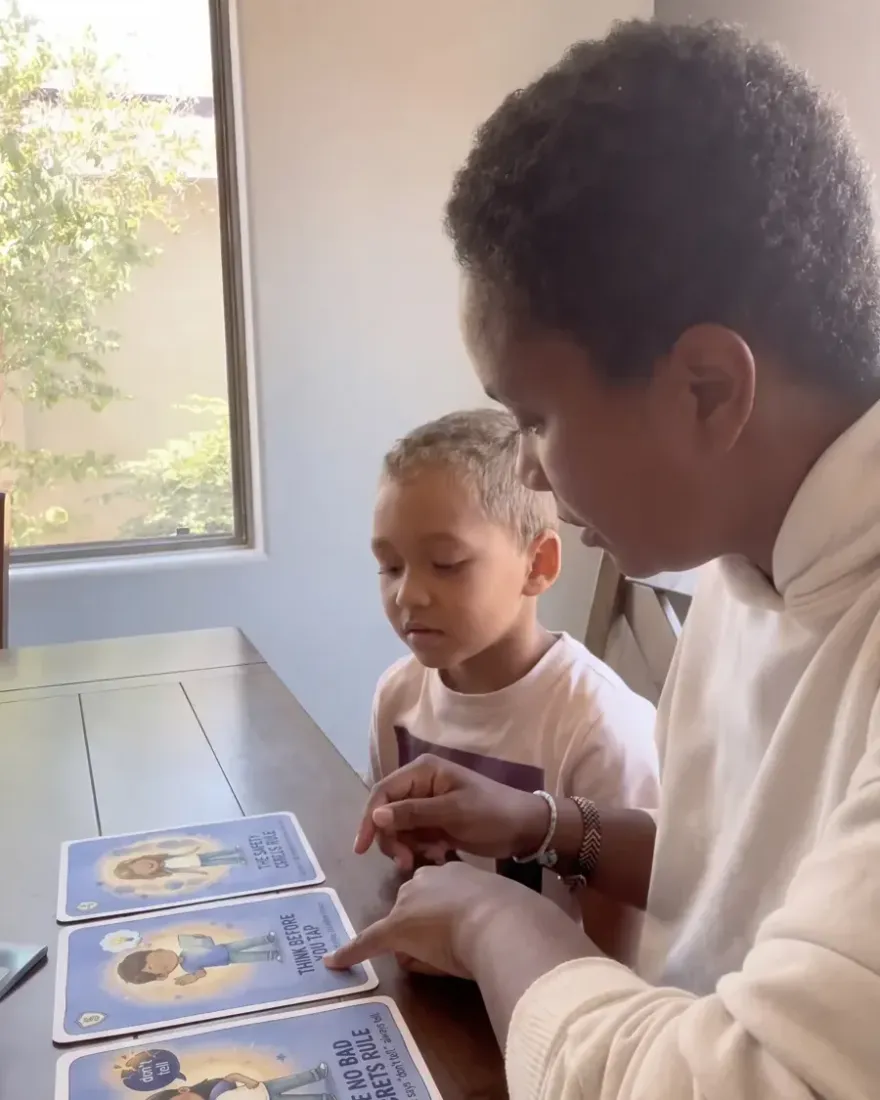
When your four-year-old is screaming because you gave them the blue cup instead of the red one, their thinking brain has literally left the building. That’s why logic doesn’t work. Their prefrontal cortex can’t process language while their nervous system is in a fight-or-flight state.
But the rest of them is still online. They can still see, move, and feel. So that’s where the regulation has to happen.
- 1
Something to look at.
Visual cues work when their ears have shut down. The card gives them something concrete to focus on instead of spiraling.
- 2
Something to do with their body.
Stomp, squeeze, breathe, shake. Big feelings need big movements. “Sit still and think about it” is torture when you're dysregulated.
- 3
Your calm voice saying the right thing.
Not logic. Not lectures. Just presence. “I'm here with you. You're safe. This feeling will pass.” That's what actually works.
We’re not trying to stop the meltdown. We’re giving everyone something to do during it that works with how nervous systems function, not against them.
The studies
Five studies that shape how we build every Talk.
Not the only research we draw on, but the five we keep coming back to. Each one earned a permanent spot in our brief.
Mother-Infant Affect Synchrony as an Antecedent of the Emergence of Self-Control
Finding: Even in infancy, co-regulation with a caregiver predicted better self-regulation later on. Mothers who stayed in sync with their baby’s emotions in the first 3 to 9 months had toddlers with significantly greater self-control by age 2, above and beyond infant temperament or IQ.
In plain English
When parents and babies “get in tune” emotionally (calm mom soothing fussy baby), it pays off big time. Those babies grow into toddlers who can manage their impulses better. Your calm rubs off.
Relations Between Toddler Expressive Language and Temper Tantrums
Finding: Toddlers with limited vocabularies had much more severe tantrums. Late-talkers (24 to 30 months) were almost 2× more likely to have frequent, dysregulated tantrums than peers with typical language skills. The first study to quantify this link.
In plain English
When kids can’t “use their words,” big feelings erupt into bigger tantrums. Kids with words for their feelings had far fewer severe tantrums in this study. Giving kids that vocabulary is the entire premise of the Big Feelings Deck.
Effectiveness of Parent-Child Interaction Therapy (PCIT), RCT
Finding: Children in the PCIT group had significantly fewer behavior problems (mother-rated, moderate effect size d ≈ 0.6) compared to standard treatment. At 18-month follow-up, families still showed reduced disruptive behaviors. Parents reported feeling less stressed and more confident.
In plain English
Parent-led, scripted interaction made a measurable difference for these families. Families using PCIT saw meltdowns drop noticeably, and parents felt more in control during the daily chaos. This is why every Trailies Talk is parent-led, not kid-led.
Brief Deep Breathing Reduces Children's Physiological Arousal
Finding: In a field experiment with 342 young children, those who watched a one-minute “belly breathing” cartoon showed an increase in calming physiology and a drop in heart rate. The control group showed no change. The effect kicked in within four slow breaths.
In plain English
“Smell the flower, blow out the candle” actually works, measurably. A one-minute breathing exercise can take a kid from high-strung to noticeably calmer at the body level. Their heart rate literally slows.
Tuning in to Kids: Emotion Coaching RCT
Finding: Parents trained in emotion coaching had 25% lower scores on harsh parenting and stress measures (sustained 6 weeks later). Their children showed significant reductions in emotion lability, meaning kids became less prone to extreme “rollercoaster” emotions. Replicated across waitlist control.
In plain English
When parents learned to “talk through” feelings instead of jumping to punishment or panic, both generations changed. Less stress for parents. Less volatility for kids. More calm cuddles. This is the framework underneath every Talk that handles a hard topic.
The body safety research
What the prevention research consistently shows.
Body safety education is a 40-year field with hundreds of peer-reviewed studies. These four findings show up across nearly all of them, and they’re the spine of how we built the Body Safety Talk.
Predators use familiarity, not force.
The clearest finding in the entire field: roughly 90% of child sexual abuse is committed by someone the family already knows and trusts, not a stranger. Abuse rarely involves force. It involves grooming, secrecy, and confusion.
Source: Crimes Against Children Research Center, Finkelhor et al., RAINN national statistics.
Children with the right vocabulary disclose earlier.
Decades of research from Sandy Wurtele and colleagues in the personal safety education tradition show that children taught anatomically correct names for body parts (and the difference between safe and unsafe touch) disclose abuse significantly earlier than children without that vocabulary.
Source: Wurtele et al., Personal Safety Education research, 1980s to present.
Body safety education works, and doesn't increase fear.
A Cochrane systematic review of school-based child sexual abuse prevention programs found that age-appropriate body safety education significantly increases protective behaviors, knowledge of unsafe situations, and disclosure rates. Importantly, it does not increase anxiety or fear in children.
Source: Walsh et al. (2015), Cochrane Database of Systematic Reviews: School-based education programmes for the prevention of child sexual abuse.
Parent-led conversations beat one-time assemblies.
Across the prevention literature, the strongest knowledge retention and behavior change comes from repeated, parent-led conversations using consistent language, not one-off school assemblies or pamphlets. The trusted adult is the curriculum. We just hand them the script.
Source: PCIT framework (Eyberg et al.), Wurtele & Kenny parent-led prevention research.
Opens the full research summary (PDF) in a new tab, free to read or download.
What makes ours different
Research is the foundation. Real life is the final review.
Plenty of parenting tools cite studies. Fewer survive contact with a 7:32 AM kitchen. Here’s what we won’t ship without.
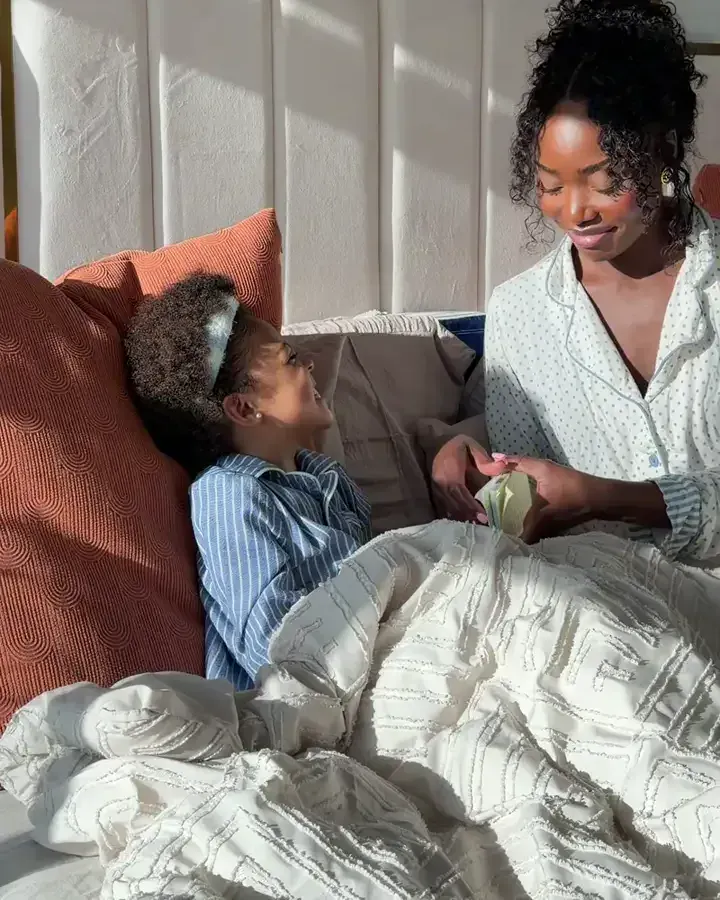
Built with people who actually work with kids.
Real teachers, therapists, and child development experts, not just someone with good intentions and a Pinterest board.
Safe for little hands and big feelings.
No shame-y language. No fear-based scripts. No “if you don’t calm down then…” just words that help everyone remember they’re safe and loved, even in the hard moments.
Tested with real kids before shipping.
Classrooms with 25 kids before lunch. Kitchens at 7:32 AM. Therapy offices with families who’ve tried everything else. If kids don’t engage, we kill the idea, even if it sounded great on paper.
Works on your phone or printed.
Sometimes your phone is dead. Sometimes you can’t find a printer. Every Talk works either way, because life is messy and we’re not going to be the thing that makes it messier.
Language that builds kids up, not breaks them down.
No threats. No bribes. No dressed-up shame. The words on every card are calibrated for the age, the topic, and the moment, so what comes out of your mouth at bedtime is something you’d be proud of years later.

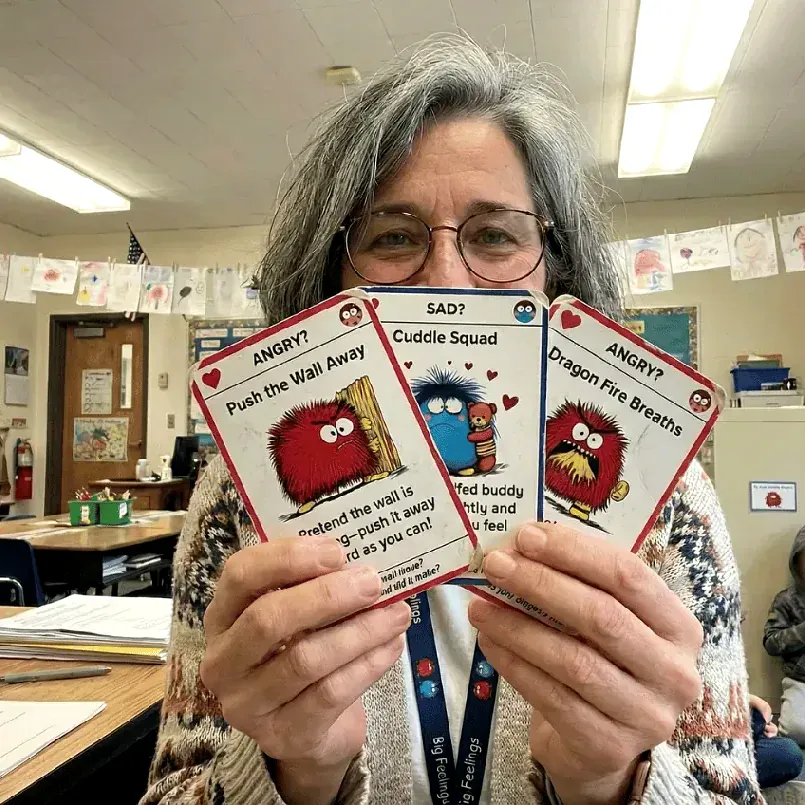
The people behind it
Built by a cycle-breaker. Built with the experts.
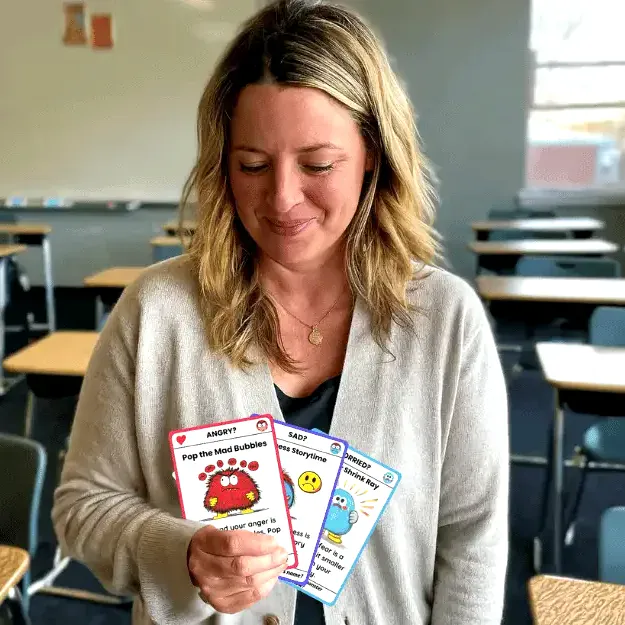
The research is one half of how Trailies gets made. The other half is the team: a founder, a roster of educators, and a panel of therapists and child development experts who pressure-test every Talk before it ships.
Read the full story →Enough science. Try the thing.
You came here because you wanted to know this was legit. Now you do. Real research. Real experts. Real families who’ve tested it in the messiest moments and said “okay, this one actually helps.”
Debbie
Debbie, Co-Founder, Trailies