
Trusted by teachers in 68+ countries • Instant digital download • 90-day money-back guarantee • Zero prep
It's 12:47pm. Students crash back from lunch. A 90-second reset you do together, here's how
For transitions, post-recess chaos, morning arrivals, meltdowns, a 90-second reset you do together, not another tool that takes 20 minutes
Used in classrooms across 68+ countries. Not another curriculum, just 54 grab-and-go cards that work in the moment. Works with Zones, Second Step, whatever you're using.
90-second resetsZero prepUse in 5 minutes
Ordering for a whole school or caseload? Bulk pricing is here.
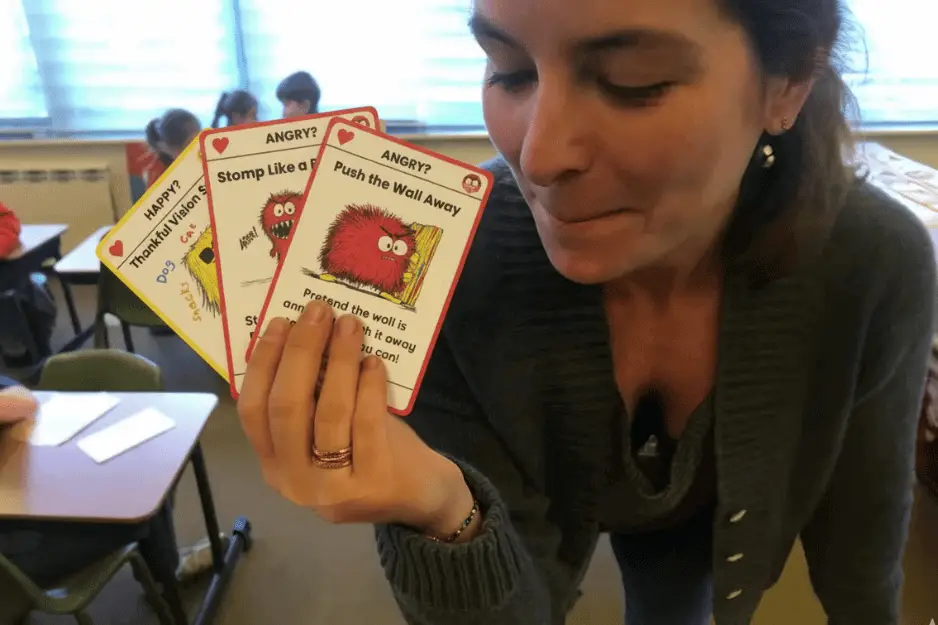
👋 Saw our ad? You're in the right place. Here's what's actually working for teachers who were exactly where you are now.
HERE'S HOW IT WORKS IN REAL MOMENTS
🌅 Morning Meeting (8:05am)
Student arrives already dysregulated. Hand them a card. 90 seconds. Day starts calm.
🔄 Transitions (10:42am)
Moving between subjects creates chaos. Use whole-class card. 2 minutes. Back to learning.
🏃 After Recess (12:47pm)
Students return loud and wound up. Quick regulation activity. Afternoon lesson starts on time.
💥 Unexpected Meltdown (2:18pm)
Student escalates mid-lesson. Hand them card for calm corner. Built-in time limits. You keep teaching.
🧠 Brain Break (3:05pm)
Energy high, focus low. Whole class reset. 90 seconds. Re-engaged for last hour.
🌙 End of Day (3:35pm)
Closing circle reflection. Students share which card they used. Builds emotional vocabulary.
Same cards. Six different moments. Zero extra prep.
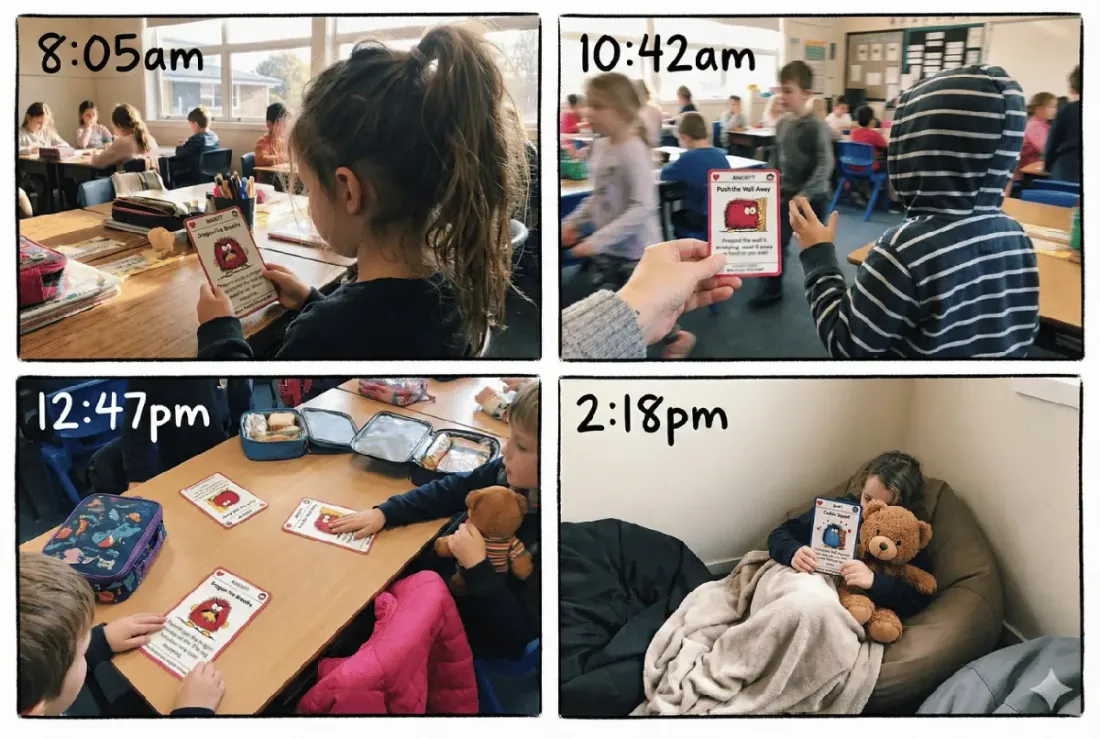
Here's what it looks like in your classroom
The Before/After Reality:
Before: 12:47pm post-lunch chaos steals 15-20 minutes. You're managing behavior, not teaching. After: 90-second card activity. By 12:52pm, you're teaching your lesson.
It's 12:47pm.
Students crash back from lunch like a tornado.
Three kids crying. Two wrestling in the doorway. Another spinning in circles making siren noises.
You haven't even started your afternoon lesson yet.
This is the moment you lose control of the afternoon.
Not because you're doing it wrong. But because the chaos spreads. One dysregulated student becomes three. Three becomes seven. And suddenly it's 1:15pm and you're still trying to get them seated.
You've tried everything.
Calm-down corners with stuffed animals. Zones charts on the wall. Breathing exercises they won't do. Proximity. Redirection. That teacher voice you save for moments like this.
Some students still melt down.
Not because you're failing. Because those tools don't work in the moment.
Zones teaches students about emotions. But it doesn't tell them what to DO when they're dysregulated at 12:47pm.
Calm-down corners work, if students know how to use them. Most don't. They sit there and stare. Or avoid work. Or stay too long.
And breathing exercises? Try getting a kid who just got pushed on the playground to “take deep breaths.”
That's why teachers reach for in-the-moment intervention cards.
Not instead of Zones. Not instead of your SEL curriculum. But for the moments BETWEEN the planned lessons.
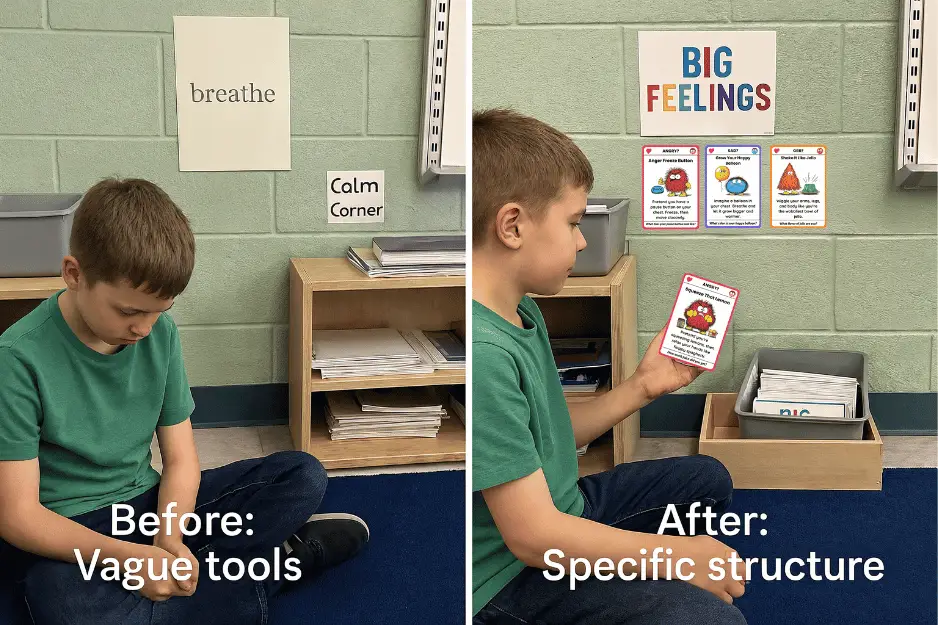
Here's how it works
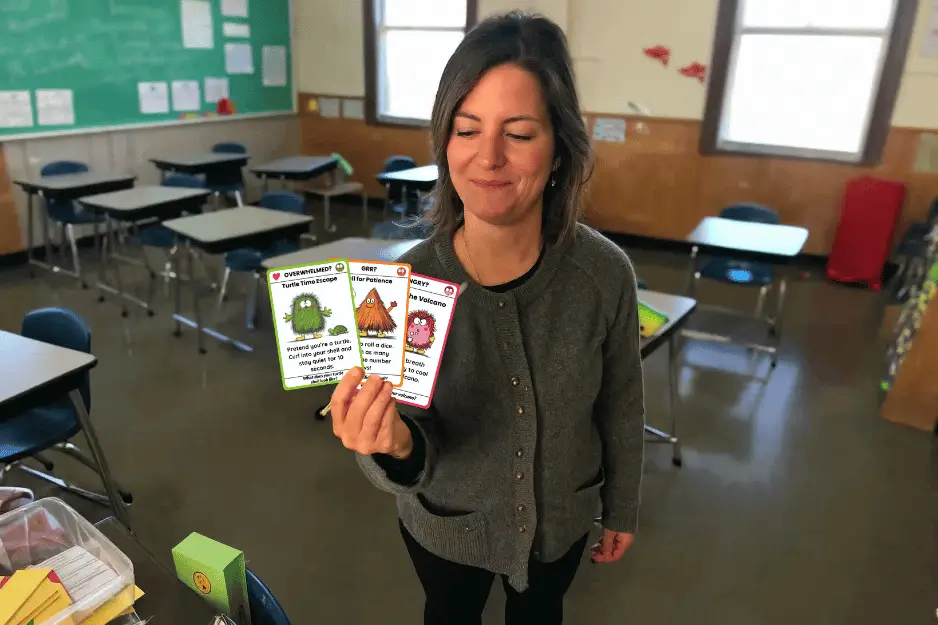
You grab a card from the “Overwhelmed” stack on your desk.
Hand it to the loudest student returning from lunch.
Child-facing side: “Squeeze your hands tight for 5 seconds, then shake them out like you're flinging water off your fingers.”
Your side: Exactly what to say. “I can see you need to reset. Try this card. When you're done, let me know if you feel calmer.”
90 seconds later, they're seated.
The other dysregulated students see it work. Two more ask for cards.
By 12:52pm, five minutes after lunch, your class is ready.
You're teaching. Not managing behavior.
You're losing 45+ hours of instructional time this year
Not because you're bad at transitions.
Because behavior management is stealing time from teaching.
“If you spent just 15 minutes on a classroom transition once a day for an entire school year, you'd lose 45 HOURS of instructional time.”
That's not theory. That's math.
And it's not just transitions.
It's the ripple effect.
One dysregulated student at 12:47pm doesn't just steal 15 minutes. They derail your entire afternoon math lesson.
Which means you're behind tomorrow.
Which means you're stressed about assessment results on Friday.
Which means admin asks about your classroom management in your next evaluation.
Which means another meeting where they tell you to “just build relationships” when you already have 200 students.
It compounds.
- Monday morning arrivals set the tone for the week, if three students show up already dysregulated, you're behind before you start
- Post-recess chaos steals 15-20 minutes every afternoon, that's 45+ hours yearly you'll never get back
- Unexpected meltdowns mid-lesson don't just interrupt, they spread like wildfire to other students
- Brain drain moments when you can see focus dropping but have no quick tool to reset them
- End-of-day exhaustion when students (and you) have nothing left but still need to finish the day
You planned good lessons. You prepped your materials. You know your pedagogy.
But you can't teach when students can't regulate.
And here's what nobody talks about:
You're spending YOUR money to fix a system problem.
You've already spent hundreds of your own money this year on classroom supplies. Out of pocket.
You bought those cute calm-down corner stuffed animals. The zones posters. The feelings chart. The sensory bottles.
And some students still melt down. Because the tools don't tell them WHAT TO DO in the moment.
The emotional cost is worse.
You go home exhausted. You're short with your own kids. You think about that student who was dysregulated all day and wonder if you could've done more.
You wake up Sunday night with anxiety about Monday.
You love teaching. You love your students.
But you can't keep losing hours to behavior management when you're supposed to be teaching.
There's a reason so many teachers switched from prevention tools to in-the-moment intervention.
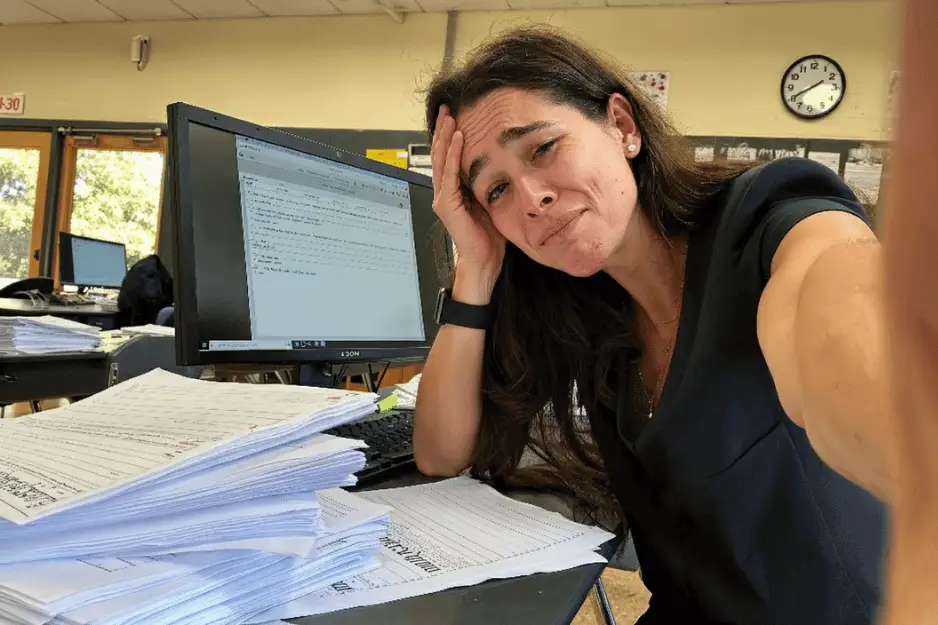
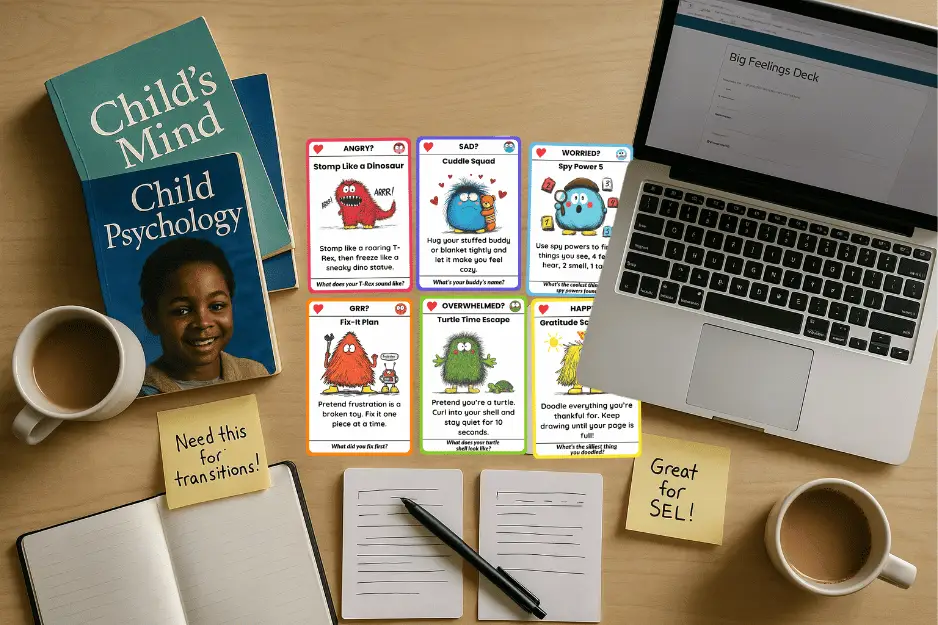
The system gave you prevention tools when you need intervention
Your SEL curriculum teaches students about emotions.
That's prevention. And it's important.
But what happens at 9:07am when a student melts down before your SEL lesson even starts?
Or at 2:34pm when someone gets triggered and you're mid-math-lesson?
The problem isn't your curriculum.
The problem is curriculum teaches WHY emotions matter.
It doesn't give students something to DO in the moment.
And calm-down corners? They only work if students know HOW to use them.
Most don't.
They sit there. Stare at the wall. Play with stuffed animals. Use it to avoid work. Stay too long because there's no built-in time limit.
You've been told to “just build relationships” with 200+ students. To “stay calm” when five kids are dysregulated at once. To implement another complex program when you're already drowning.
None of that helps at 12:47pm when students crash back from lunch.
You need something that works NOW. Not next month after you've done the training.
You need what actually works.
That's why teachers created grab-and-go intervention cards
Not consultants who left teaching 15 years ago.
Teachers who were drowning in behavior management and needed something that worked TODAY.
Big Feelings Deck gives students something to DO when emotions hit.
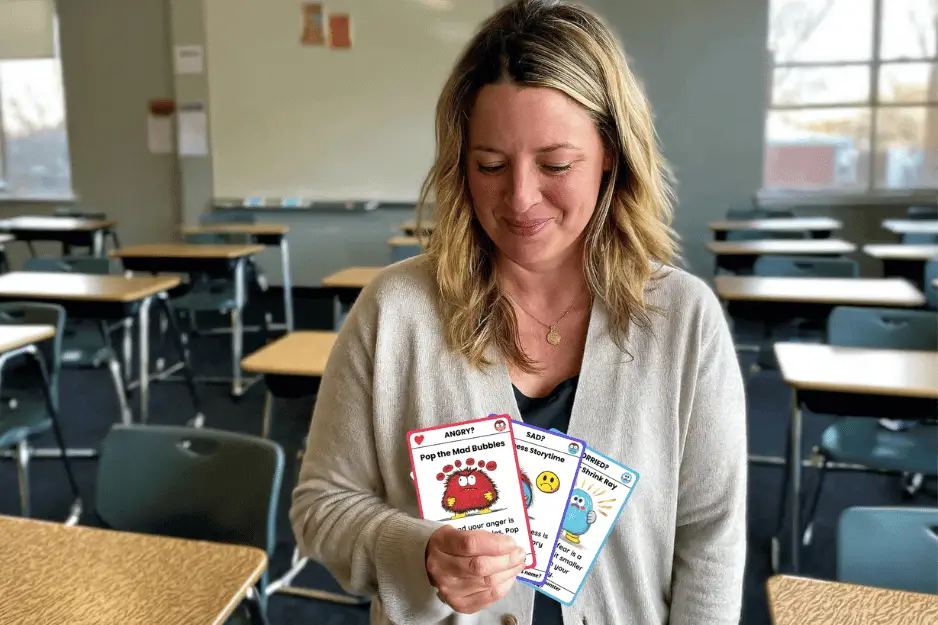
54 cards. Child-facing activities. Teacher-facing scripts. About 90 seconds each. Zero prep required.
What This ISN'T:
- Another curriculum to teach
- Replacement for your SEL program
- Complex theory requiring training
- Behavior charts or punishment
What This IS:
- Grab-and-go cards for real moments
- Works with Zones/Second Step
- Zero prep required
- In-the-moment intervention
What makes this different
In-the-moment intervention.
Not planned lessons. Not prevention. Responsive support when students need it.
Zero prep.
The cards ARE the instructions. Download, print, use. No training required.
Built-in time limits.
90-second activities prevent avoidance. Students can't “hide” in the calm corner for 20 minutes.
Teacher scripts included.
You don't have to figure out what to say. Just read the card.
Students become independent.
After 2-3 uses, they request cards by name. Your burden decreases over time.
Works everywhere.
Desk. Calm corner. Hallway. Morning meeting. Brain breaks. Transitions. Anywhere.
Complements your curriculum.
Use with Zones, Second Step, whatever you're already doing. Fills the gaps between lessons.
One-time purchase.
Multi-year-long classroom use. Not a subscription.

Here's exactly how it works in your classroom
Download and print the cards (or use digitally)
Takes 5 minutes. One-time setup. Print on cardstock or laminate if you want. Or just keep the PDF on your phone.
Introduce one emotion category to students
Start with “Angry” or “Overwhelmed”, the ones you need most. Model it once during a calm moment. Takes about 90 seconds.
Grab a card when a student needs support
Transition chaos? Morning meltdown? Post-recess overwhelm? Hand them a card. They do the activity. You keep teaching.
Watch students become independent
After 2-3 uses, students start requesting specific cards. “Can I use the squeeze card?” Your job gets easier.
That's it. No complex system. No training. No meetings.
What teachers say after using it
“My post-lunch transition went from 18 minutes of chaos to 4 minutes. I handed cards to my three loudest students the moment they walked in. They did the activities. We started our lesson on time. I'm not exhausted by 2pm anymore.”
Sarah Martinez, 4th grade, Denver
“I was skeptical. Another 'tool' to add to my pile. But this one actually works. Students ask for specific cards now. 'Can I use the squeeze card?' They regulate themselves. I teach.”
Marcus Thompson, 2nd grade, Atlanta
“Morning arrivals used to derail my first hour. Three students would show up dysregulated and I'd spend 30+ minutes settling the class. Now I hand out cards at the door. By 8:15am we're learning. Game changer.”
Jessica Patel, Kindergarten, Portland
“I have 28 first graders. Before this, meltdowns spread like wildfire. One dysregulated kid became five. Now? Hand out cards. 2-3 minutes. Back to calm. It's the only thing that actually stopped the contagion.”
David Chen, 1st grade, San Diego
“I tried calm-down corners. Students sat there for 20 minutes avoiding work. These cards have built-in time limits. About 90 seconds. They regulate and return. Finally something that works without becoming a hiding spot.”
Amanda Rodriguez, 3rd grade, Chicago
“My admin kept pushing another SEL curriculum. I don't need more prevention lessons. I needed intervention for 2:47pm when a student melts down mid-math. These cards are that intervention. I wish I'd found them years ago.”
Kevin O'Brien, 5th grade, Boston
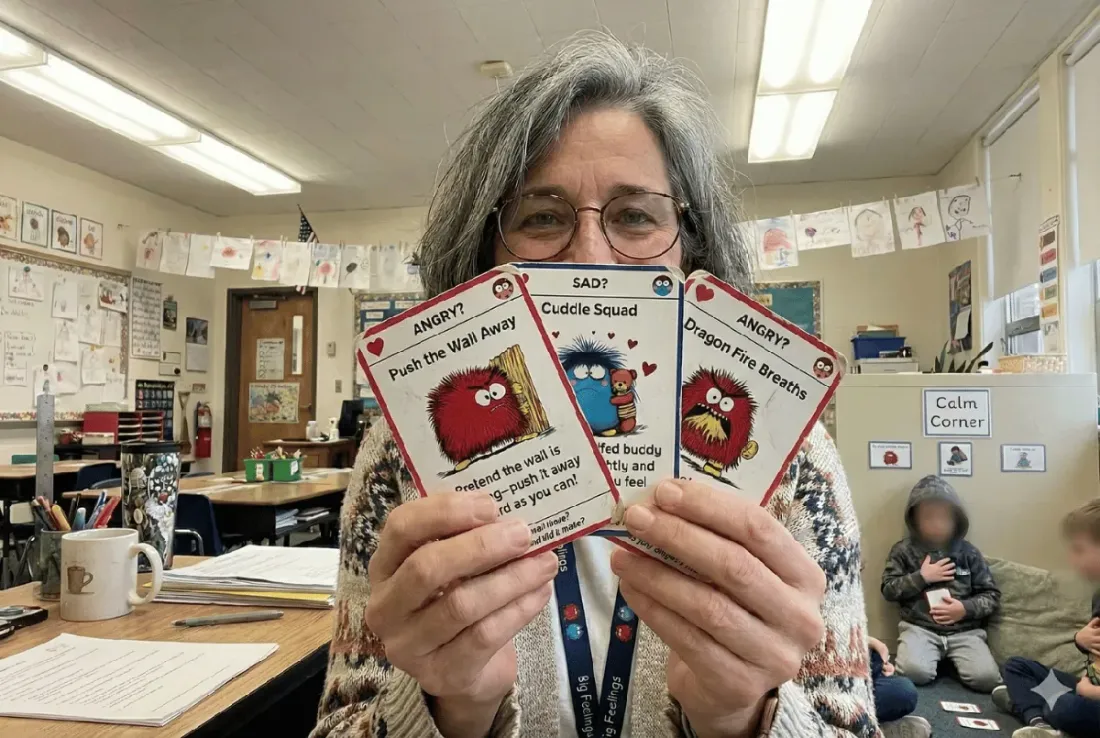
Big Feelings Deck vs. what you're already using
You asked: “How is this different from Zones/Second Step/my calm-down corner?”
| Zones/Second Step | Calm-Down Corner | Big Feelings Deck | |
|---|---|---|---|
| Time Required | 20-45 min lessons | Undefined/varies | About 90 seconds |
| When to Use | Planned curriculum time | Only during crisis | Anytime, anywhere |
| Prep Required | Lesson planning | Physical space setup | Zero prep |
| Training Needed | PD sessions required | Implementation guidance | Use in 5 minutes |
| What It Does | Teaches WHY emotions matter | Provides quiet space | Shows WHAT TO DO |
| Student Independence | Gradual (weeks/months) | Varies by student | 2-3 weeks typical |
| Built-in Structure | Curriculum sequence | Often lacks structure | Time limits + scripts |
| Works With Existing SEL | IS the curriculum | Supplement to curriculum | Complements any program |
| Cost | Annual subscription | Ongoing setup cost | One-time purchase |
Here's the truth:
Your curriculum teaches students about emotions (prevention).
Your calm-down corner gives them space (location).
Big Feelings Deck gives them something to DO in the moment (intervention).
They all work together. This isn't replacement, it's the missing piece.
What a day looks like with Big Feelings Deck
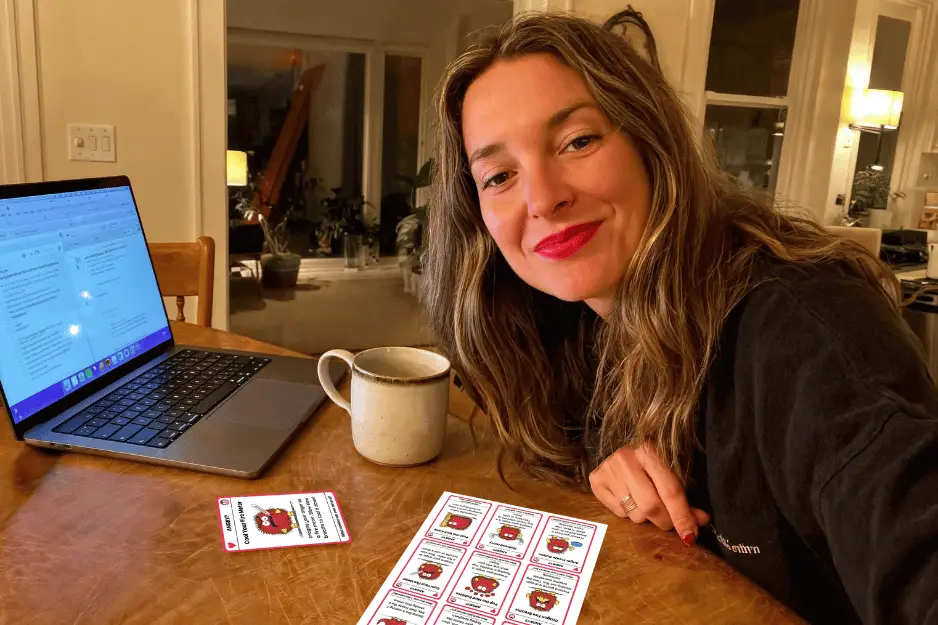
8:03am - Morning Meeting
Jayden arrives already upset. Before, this would derail your first 20 minutes.
Now? You hand him the “Worried” card. 90 seconds of breathing through his fingers. He's seated by 8:05am. Your morning starts on time.
10:42am - Transition Chaos
Moving from reading to math usually creates 10 minutes of chaos.
Today you use a whole-class card. “Rainbow Arms.” 2 minutes. Everyone's refocused. You're teaching math by 10:44am.
12:47pm - Post-Lunch Overwhelm
Three students crash back from lunch dysregulated.
You hand them cards at the door. They do their activities. By 12:52pm, your class is calm and ready. You've reclaimed your afternoon.
2:18pm - Unexpected Meltdown
Marcus gets triggered during a group activity.
Before, this would've stolen 30 minutes. Now? He takes a card to the calm corner. About 90 seconds. Returns regulated. You kept teaching the whole time.
3:05pm - Energy Drop
Last hour of the day. Focus is gone. Students are fidgety.
Quick brain break with a movement card. 90 seconds. Re-engaged for your closing lesson.
3:40pm - Reflection
You check your watch. You actually taught today.
No hour-long meltdowns. No losing control of transitions. No exhaustion by 2pm.
You went home with energy left. That's what this does.
Here's everything you get
- 54 regulation cards across 6 emotion categories (Angry, Sad, Worried, Overwhelmed, Frustrated, Happy)
- Child-facing activities that take about 90 seconds each with clear, simple instructions
- Teacher-facing scripts so you know exactly what to say in the moment
- Printable PDF to create physical cards for your classroom
- Mobile-optimized digital version for tablets, phones, or projecting to the whole class
- Quick-start guide to get your first card in use within 5 minutes
- Implementation suggestions for calm corners, brain breaks, transitions, and more
- Email support from real teachers who actually use this in their classrooms
- Lifetime access to any updates or new cards added
- 90-day money-back guarantee if it doesn't work in your classroom
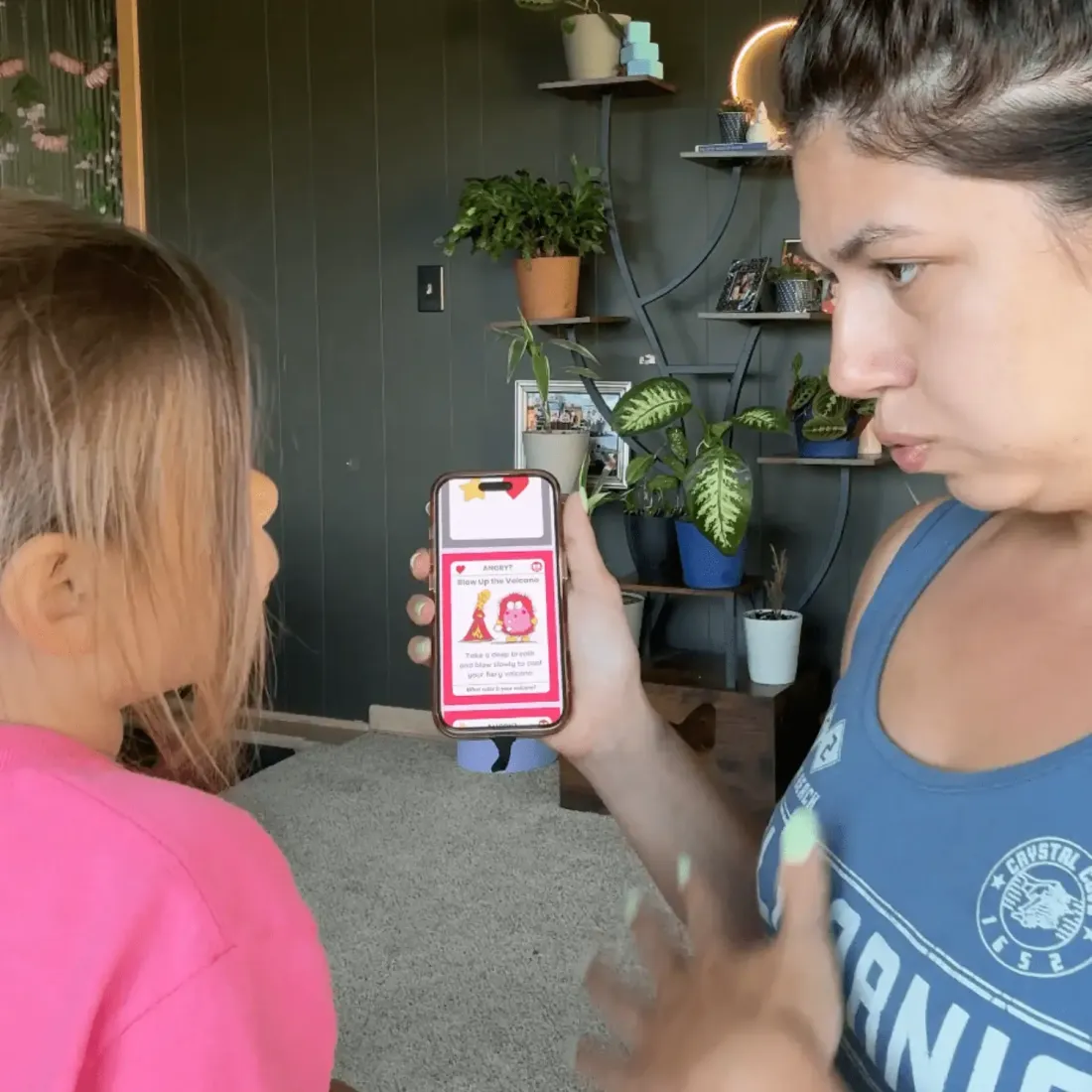
One purchase. Use for years.
Not a subscription. Not per-student pricing. One payment. Use with every class you teach. Forever.
Questions teachers ask before buying
Starting is easier than you think
Most teachers see results in days, not weeks:
5 minutes from now:
You've downloaded the cards. Printed or saved to your phone.
Tomorrow morning:
Pick 3-4 cards from “Overwhelmed” or “Angry”, the emotions you see most.
Tomorrow afternoon:
Model one card during a calm moment. Takes about 90 seconds.
Next transition/meltdown:
Hand a student the card. Let them try it.
Within one week:
Students start requesting cards by name.
Within two weeks:
Transitions that used to eat 15 minutes are taking a fraction of that. Teachers tell us this is when it clicks.
This isn't another 6-month implementation. This is grab-and-go from day one.
In our survey of 2,500 customers, 94% report fewer meltdowns and 90% see a change in the first 7 days.

Here's what makes this risk-free
90-Day Money-Back Guarantee
Use Big Feelings Deck for 90 days. If it doesn't reduce your behavior management time and give you more teaching minutes, email us for a full refund. No questions asked.
We're not asking you to trust marketing copy.
We're asking you to try it. For three months. In your actual classroom. With your actual students.
If it doesn't work, you get your money back.
But you won't ask for a refund. Because you'll finally have something to grab when everything falls apart.
Tomorrow morning is coming
Students will arrive dysregulated.
Transitions will get chaotic.
Post-lunch will steal your afternoon.
That's not changing.
But what you do about it can change.
Right now you have two options.
Option 1: Keep doing what you're doing. Hope it gets better. Spend another year losing 45+ hours to behavior management. End each day exhausted.
Option 2: Download Big Feelings Deck tonight. Print 3-4 cards. Use the first one tomorrow. Start reclaiming your teaching time.
Thousands of teachers chose option 2.
Monday morning is coming either way. You can walk in with something that works, or you can walk in with the same tools that failed last week.
Let's talk about what this actually costs
If Big Feelings Deck saves you just 10 minutes per day...
That's 50 minutes per week.
200 minutes per month.
30+ hours per school year.
30 hours you're not managing meltdowns. Not redirecting behavior. Not losing control of transitions.
30 hours of actual teaching.
You don't need another curriculum. You need something to grab when a student needs help NOW.
Teachers use Big Feelings Deck for those moments.
The 12:47pm post-lunch chaos. The Monday morning meltdown. The unexpected upset during math. The transition that steals 15 minutes you'll never get back.
Not another complex system. Just 54 cards that work.
Download in 2 minutes. Print if you want. Start using today.
If it doesn't work in your classroom, full refund. No questions asked.
But you won't ask for a refund. Because you'll finally have something to grab when everything falls apart.
Big Feelings Deck for Classrooms
54 printable + digital cards for in-the-moment emotional regulation
One-time payment. Use forever.
Here's what that means:
- Pennies per student per day for year-long classroom use
- You're already spending hundreds of your own money on supplies every year
- This saves you 2+ hours weekly (What's that worth?)
- No recurring fees. Use for 5+ years.
- 54 cards = 54 ways to support students
Order today: Includes the Quick-Start Implementation Guide free, plus lifetime access to every update we add.
What you get:
- 54 regulation cards (child + teacher sides)
- Printable PDF + mobile-optimized versions
- Quick-start guide (use first card in 5 min)
- Email support from real teachers
- 90-day money-back guarantee
Download now. Use tomorrow morning. Full refund if it doesn't work.
Big Feelings Deck for Classrooms
Use in 5 minutes • 90-day guarantee • No risk